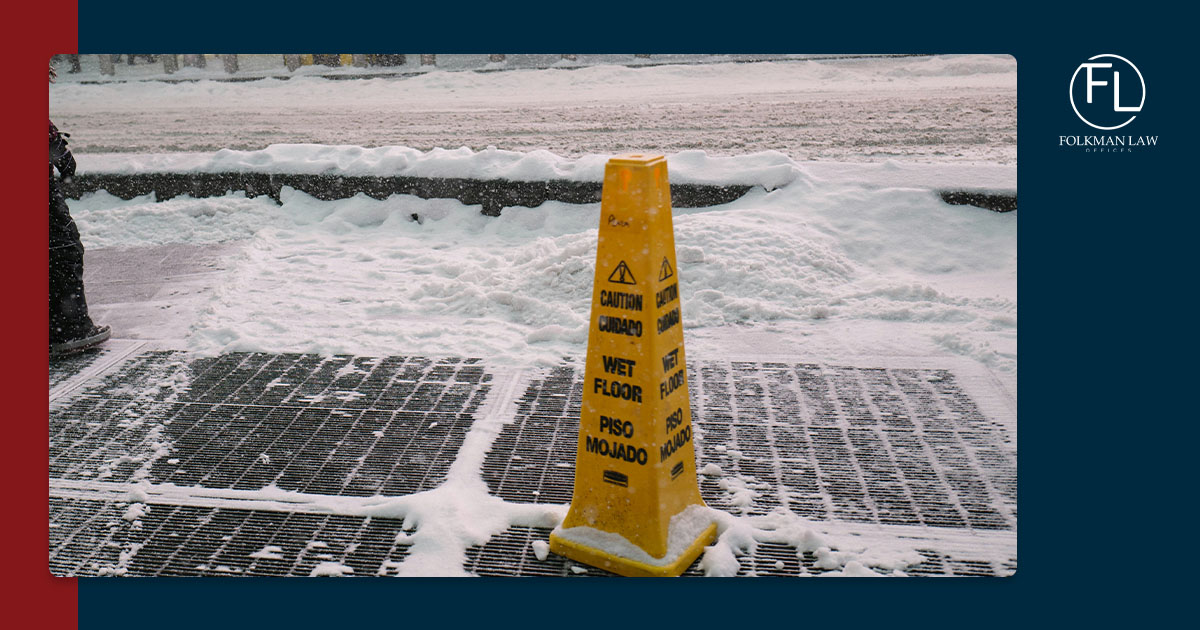
When people think of icy slip and fall accidents, they picture an active snowstorm or freezing rain. In reality, some of the most dangerous ice forms when the weather looks perfectly fine.
Melt and refreeze conditions, when snow or ice melts during the day and refreezes as temperatures drop, create nearly invisible hazards that lead to countless slip and fall accidents each winter in Cherry Hill. These situations are dangerous because they catch pedestrians off guard. Sidewalks may appear wet rather than icy, and property owners may assume the danger has passed.
Unfortunately, melt-and-refreeze ice can be more treacherous than freshly fallen snow.
What Is the Melt and Refreeze Cycle?
Melt and refreeze occurs when snow or ice melts during the day due to sunlight, traffic, or slightly warmer temperatures, then refreezes when temperatures drop.
This refreeze usually happens after sunset. In Cherry Hill, this is common during late winter when daytime highs hover above freezing and nighttime temperatures dip back into the 20s.
All that water from melting snow does not disappear. It runs off roofs, collects in low spots, and spreads across walkways. When that water refreezes, it forms a thin, hard layer of ice that blends into concrete and asphalt.
By morning, what looked like a damp surface the day before can be a nearly invisible hazard.
Why Melt and Refreeze Ice Is Dangerous
Melt-and-refreeze ice is one of the leading causes of slip and fall accidents because it is difficult to detect. Unlike packed snow or visibly icy patches, refrozen ice is clear and smooth. There are a few factors that make these conditions risky:
- Low visibility: Clear ice blends into walkways.
- Unexpected timing: Ice forms after snow removal crews have left.
- Isolated patches: One slick spot is enough to cause a fall.
- High foot traffic: Busy commercial areas polish ice smoothly.
Since pedestrians expect sidewalks to be maintained after snowstorms, these hidden hazards pose a serious risk and can lead to serious injuries.
Where Do Melt-and-Refreeze Falls Occur in Cherry Hill?
Slip and fall accidents related to melt-and-refreeze conditions occur in areas where water naturally pools or drains. These spots include:
- Apartment complexes and condo communities
- Retail shopping centers and grocery store parking lots
- Office buildings and medical facilities
- Stairways, ramps, and curb cuts
- Walkways beneath rooflines or downspouts
These areas are under the control of property owners or managers who are responsible for monitoring changing weather conditions.
Property Owner Duties Under New Jersey Law
In New Jersey, property owners have a legal duty to maintain their premises in a reasonably safe condition for lawful visitors. That duty does not end once the snow stops falling. In fact, melt-and-refreeze conditions require more attention because hazards can develop hours later.
Property owners need to attend to winter maintenance, such as:
- Applying salt or ice melt before the nighttime temperature drop
- Monitoring known trouble spots where water accumulates
- Fixing drainage issues that cause recurring ice formation
- Reapplying de-icing materials as conditions change
- Posting warning signs when ice cannot be immediately addressed
When property owners ignore predictable refreezing conditions, they may be held liable for resulting injuries.
What Injuries Are Caused by Ice-Related Falls?
Slip and fall accidents on refrozen ice happen suddenly and without warning, increasing the risk of serious injury. Some of these injuries include:
- Broken wrists, ankles, and hips
- Knee and shoulder injuries
- Back and spinal injuries
- Concussions and traumatic brain injuries
- Soft tissue injuries that worsen over time
These injuries can result in mounting medical bills, missed work, and long-term mobility issues, especially for older Cherry Hill residents.
How Melt and Refreeze Affects Slip and Fall Claims
In slip and fall cases, the central question is whether the property owner acted reasonably under the circumstances. Melt-and-refreeze accidents raise important issues, such as:
- How long the ice was present before the fall
- Whether refreezing was foreseeable based on the weather
- Whether inspections were conducted after temperatures dropped
- Whether any preventative steps were taken
Since Cherry Hill experiences frequent freeze-thaw cycles in winter, courts may view these hazards as foreseeable rather than unavoidable acts of nature.
Weather reports, maintenance logs, photographs, and witness statements can all help establish whether a property owner failed to meet their duty of care.
Why Insurance Companies Push Back
Insurance companies argue that winter ice is open and obvious.
Melt-and-refreeze conditions undermine that defense because the danger is hidden and develops after initial snow removal efforts. When ice forms overnight due to predictable temperature drops, the issue becomes whether the property owner should have anticipated the hazard and taken additional steps to prevent harm.
Get Help for Your Slip and Fall Claim
Melt-and-refreeze conditions are one of the most overlooked winter hazards in Cherry Hill. What starts as melting snow during the day can become invisible ice overnight. That can turn ordinary walkways into serious safety risks.
If you were injured in a slip and fall caused by melt-and-refreeze ice in Cherry Hill, reach out for legal help.
At Folkman Law, we understand how New Jersey slip and fall claims work and how freeze-thaw conditions can create serious, preventable dangers. A conversation can help you understand your options, protect your rights, and decide what steps make sense for your situation.